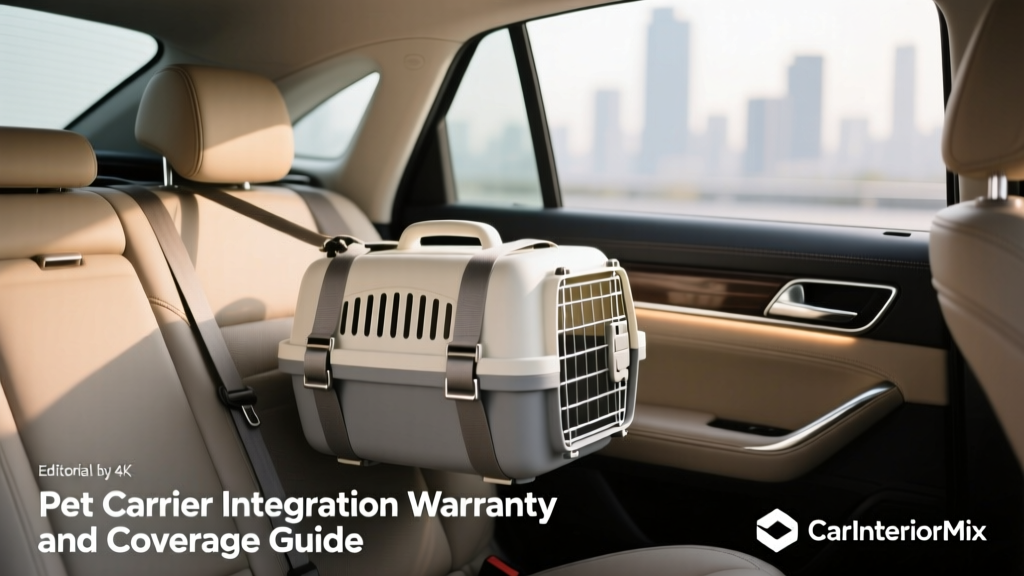
Pet Carrier Warranty & Coverage (2026)
Traveling with pets is one of the best parts of car ownership?weekend hikes, vet runs, road trips, and simple errands feel better with your dog or cat along for the ride. But once you move beyond tossing a soft carrier on the back seat and start integrating a pet carrier into your vehicle interior (seat-mounted crates, cargo-area kennel systems, barrier setups, anchor straps, and hard-mounted platforms), you?re changing how the cabin works. That can affect everything from seat mechanisms and trim wear to airbags and seatbelt pretensioners.
Here?s the part many owners miss: warranty and coverage questions usually show up after something goes wrong. A cracked trim panel, a seat that won?t fold, a squeaky cargo floor, an airbag light that won?t clear?suddenly you?re wondering whether your factory warranty still applies, whether your pet carrier brand will cover damage, and whether your insurance will help. This guide breaks down how pet carrier integration intersects with warranties and coverage, so you can protect your car and your pet without guesswork.
You?ll get practical steps to install carriers correctly, documentation tips that actually matter at the dealership, and a clear way to compare pet carrier products by warranty-friendliness and vehicle compatibility.
What ?Pet Carrier Integration? Means (and Why Warranty Comes Into It)
?Pet carrier integration? is any setup that connects a carrier or containment system to the vehicle more permanently than simply placing it on a seat. Common examples include:
- Seatbelt-secured carriers (soft or hard) using the vehicle?s seatbelt path
- LATCH/ISOFIX-attached carriers using child-seat anchors (when the carrier explicitly allows it)
- Cargo-area crates secured with tie-downs, straps, or fixed brackets
- Dog barriers spanning headrests, seatbacks, or cargo rails
- Drawer/platform systems that create a flat load floor and mount to factory points
- Hard-mounted kennel frames bolted to the vehicle or to an internal platform
Warranty questions arise because these installs can:
- Stress seat frames, rails, recline mechanisms, and cargo floor panels
- Interfere with airbag sensors (especially seat occupancy sensors) and seatbelt hardware
- Cause trim damage (scratches, broken clips, gouged plastics)
- Create electrical issues if accessories tap into power outlets incorrectly (fans, lights)
- Prompt a dealer to ask, ?Was anything modified?? during a claim
Understanding the Three Types of Coverage You?re Really Dealing With
1) Factory Vehicle Warranty (Bumper-to-Bumper and Powertrain)
Your vehicle warranty generally covers defects in materials and workmanship. It typically does not cover damage caused by misuse, accidents, wear, or aftermarket modifications. The key nuance: adding a pet carrier doesn?t automatically ?void? your warranty. What can happen is a denial of a specific claim if the manufacturer or dealer can reasonably tie the problem to the carrier installation or use.
Real-world example: If you mount a platform that compresses the cargo floor and later the cargo latch won?t align, the dealer may classify it as ?outside influence? and deny coverage for the latch adjustment or broken trim clips. But if your window regulator fails, a pet carrier likely has nothing to do with it.
2) Pet Carrier Manufacturer Warranty
Carrier brands commonly warranty:
- Defects in materials (cracked welds, broken latches, zipper failure)
- Workmanship issues (misaligned doors, faulty stitching)
They often do not cover:
- Damage caused by crashes or improper installation
- Chewing, clawing, or ?pet behavior? wear
- Damage to your vehicle interior caused by the carrier
3) Auto Insurance and Accessory Coverage
Insurance may help when there?s a covered incident (collision, comprehensive event) that damages the carrier or interior. Coverage depends on your policy and whether the carrier is considered a personal item, an accessory, or part of the vehicle setup.
- Collision: may cover carrier and interior damage after an accident (minus deductible)
- Comprehensive: may cover theft, fire, vandalism, falling objects
- Accessory coverage/endowment: some policies allow declared aftermarket equipment
Practical tip: If you install an expensive integrated kennel system, call your insurer and ask how it should be listed. Keep receipts and photos.
Warranty-Friendly Pet Carrier Integration: What Dealers and Manufacturers Look For
When a warranty claim gets evaluated, the question is usually: ?Did the pet carrier setup cause or contribute to the failure?? The setups that stay warranty-friendly tend to follow these rules:
- Use factory attachment points (tie-down rings, cargo anchors) instead of drilling new holes
- Avoid blocking SRS components (airbag deployment zones, seat sensor wiring)
- Maintain seat and belt function (no seatbelt buckles trapped under hardware)
- Prevent trim load points (use load-spreading pads and non-slip mats)
- Follow product instructions exactly (especially weight limits and anchor methods)
Step-by-Step: Document and Install Your Pet Carrier to Protect Warranty Claims
Step 1: Read Your Vehicle Manual Sections That Matter
- Check the owner?s manual for cargo load limits and tie-down locations.
- Review guidance on seatbelt use and child-seat anchors. Don?t assume LATCH/ISOFIX is approved for pet products.
- Find airbag warnings, especially for front passenger seat occupancy sensors.
Step 2: Choose the Right Location (Rear Seat vs Cargo Area)
- Rear seat placement is common for small carriers and cats, but watch for seat sensor issues and belt routing.
- Cargo-area placement (SUVs/hatchbacks/wagons) often provides better stability and less interaction with airbags, but it must be anchored properly.
Step 3: Use Non-Marring Protection Before You Strap Anything Down
Preventing interior damage is a big part of avoiding claim disputes later.
- Add a rubber cargo liner or all-weather mat under crates
- Use closed-cell foam or a load-spreading panel under hard edges
- Install seatback protectors if the crate touches the back of seats
Step 4: Anchor Using Approved Points (No Guesswork)
- Locate factory cargo tie-down rings or rails.
- Use rated straps with cam buckles or ratchets (avoid cheap hooks that bend).
- Ensure the carrier cannot slide forward, backward, or tip.
- Keep straps away from sharp trim edges; use strap sleeves if needed.
Tip: After tightening straps, try to move the carrier with both hands. You want minimal movement?especially forward motion.
Step 5: Confirm Seatbelts, Seats, and Airbag Indicators Work Normally
- Check that rear seats still fold and latch properly.
- Verify seatbelts retract smoothly and buckle without obstruction.
- Start the vehicle and ensure no new warning lights appear.
Step 6: Photograph the Setup and Save Proof
This is simple but powerful if questions come up later:
- Take photos of attachment points, strap routing, and protective mats.
- Save purchase receipts and installation instructions (PDF or printed).
- Record the date installed and note any interior condition details.
Product Types Compared: Which Setups Typically Create Fewer Warranty Headaches?
Soft-Sided Seatbelt Carriers
- Best for: cats and small dogs, occasional travel
- Warranty risk: low, if seatbelt routing is correct and no sensors are triggered
- Watch for: crushing on seat bolsters, belt buckle damage, pet accidents that stain upholstery
Hard-Sided Crash-Tested Carriers (Seat or Cargo)
- Best for: frequent travel, owners prioritizing safety
- Warranty risk: low to moderate depending on anchoring method and interior protection
- Watch for: hard corners gouging trim; use edge guards or a platform
Aluminum/Composite Crates for Cargo Areas
- Best for: medium/large dogs and SUVs
- Warranty risk: moderate if not load-spread or if tied to weak trim points
- Watch for: rattles, cargo floor deformation, pressure on liftgate trim
Barriers (Headrest-Mounted, Floor-to-Roof, or Rail-Mounted)
- Best for: dogs that need separation from the cabin
- Warranty risk: moderate?headrest posts and trim can be stressed
- Watch for: overtightening that bends headrest supports or damages seatback frames
Recommended Buying Criteria (Warranty-Smart Checklist)
Instead of chasing buzzwords, evaluate pet carriers and integrated crate systems using these criteria:
- Vehicle-specific fit guidance: Does the brand list compatible vehicle types and dimensions?
- Clear anchoring instructions: Seatbelt path, tie-down routing, and strap ratings explained plainly
- Replaceable wear parts: straps, pads, door latches, and hardware available separately
- Non-marring contact points: rubber feet, protective edges, included mats
- Warranty terms you can live with: length, exclusions, and claims process transparency
- Crash testing (if applicable): published test methodology and size/weight limits
Quick comparison idea: If you?re deciding between a budget crate that needs DIY anchoring and a midrange crate with built-in tie-down rings and padding, the midrange option often reduces interior damage risk and ?installer error,? which can keep both warranty and resale value on your side.
How to Talk to Your Dealer or Service Advisor (Without Creating Confusion)
If you?re dealing with a warranty-related issue and you have a pet carrier integrated into the interior, keep it factual:
- Explain what the product is and how it?s attached (factory tie-downs, seatbelt, etc.).
- Share photos of the setup and mention no drilling/no wiring changes if that?s true.
- If the issue seems unrelated (example: infotainment rebooting), keep focus on symptoms, not pet travel.
- If the issue might be related (rattle, trim crack), be upfront and ask for an inspection estimate.
Real-world example: A common scenario is a cargo-area rattle after installing a crate. A technician may find the tie-down hook tapping a trim panel. That?s typically not a ?defect,? but it?s easy to fix with padding and rerouting?cheaper than arguing warranty coverage.
Common Mistakes to Avoid
- Using LATCH/ISOFIX anchors without explicit approval from the carrier manufacturer (and without checking vehicle guidance).
- Drilling into the floor or seat frames for a ?more secure? mount. This can create rust points, damage wiring, and complicate warranty claims.
- Overtightening barrier clamps and bending headrest posts or stressing seatback frames.
- Blocking air vents or HVAC intakes in the cargo area, causing overheating or poor cabin airflow.
- Ignoring weight distribution (large crates placed too far back can increase liftgate trim contact and noise).
- Skipping interior protection and then blaming ?cheap plastics? when trim gets gouged.
- Assuming ?pet hair and scratches? are warranty items. These are usually considered wear and tear.
FAQ: Pet Carrier Integration Warranty and Coverage
Does installing a pet carrier void my car warranty?
No?installing a pet carrier doesn?t automatically void your warranty. A dealer may deny coverage for a specific repair if they can show the carrier installation or use caused the problem (trim damage, seat mechanism issues, sensor problems).
Will a pet carrier manufacturer pay for damage to my seats or cargo trim?
Usually not. Most carrier warranties cover the carrier itself against defects, not damage to your vehicle interior. Check the brand?s exclusions carefully?especially around ?improper installation? and ?incidental damage.?
What?s the safest, most warranty-friendly way to secure a crate in an SUV?
Use factory cargo tie-down points with rated straps, add a rubber cargo liner or load-spreading pad under the crate, and keep the crate from contacting liftgate trim and seatback latches. Avoid drilling or attaching to fragile trim pieces.
If my airbag light comes on after I add a carrier, what should I do?
Remove the carrier and any straps interfering with seats or seatbelt hardware, then restart the vehicle. If the light stays on, get the system scanned promptly. Seat occupancy sensors and wiring under seats can be sensitive to pressure, pinched wiring, or items shoved into seat gaps.
Does auto insurance cover a pet carrier or integrated kennel system?
Sometimes. If the carrier is damaged in a covered loss (collision, theft, fire), it may be covered under your policy?often subject to deductibles and policy terms. For expensive integrated systems, ask your insurer about accessory coverage and keep receipts/photos.
Can I use a barrier instead of a carrier to reduce warranty risk?
A barrier can be a good option, but it still has warranty considerations. Poorly fitted barriers can stress headrest posts or scratch trim. Choose a barrier with protective pads and vehicle-friendly mounting, and avoid overtightening.
Actionable Next Steps
- Audit your current setup: confirm you?re using factory tie-downs and that nothing rubs on trim or seat mechanisms.
- Add protection: a cargo liner, foam pads, and strap sleeves cost far less than replacing interior panels.
- Create a ?warranty folder?: photos, receipts, and the carrier?s instructions saved to your phone.
- Ask one smart question before buying: ?How does this carrier anchor, and does it require drilling or non-factory hardware??
- Talk to your insurer if your integrated system is expensive or semi-permanent.
Your pet?s safety and your vehicle?s interior can absolutely coexist?you just need an install approach that respects the way modern seats, sensors, and trim are designed. For more practical car interior guides, product-fit tips, and ownership checklists, explore the latest articles on carinteriormix.com.